
Wholesale coffee buying mistakes
A guide that moves coffee buying beyond price and first tasting, focusing on standards, supply continuity and field performance.
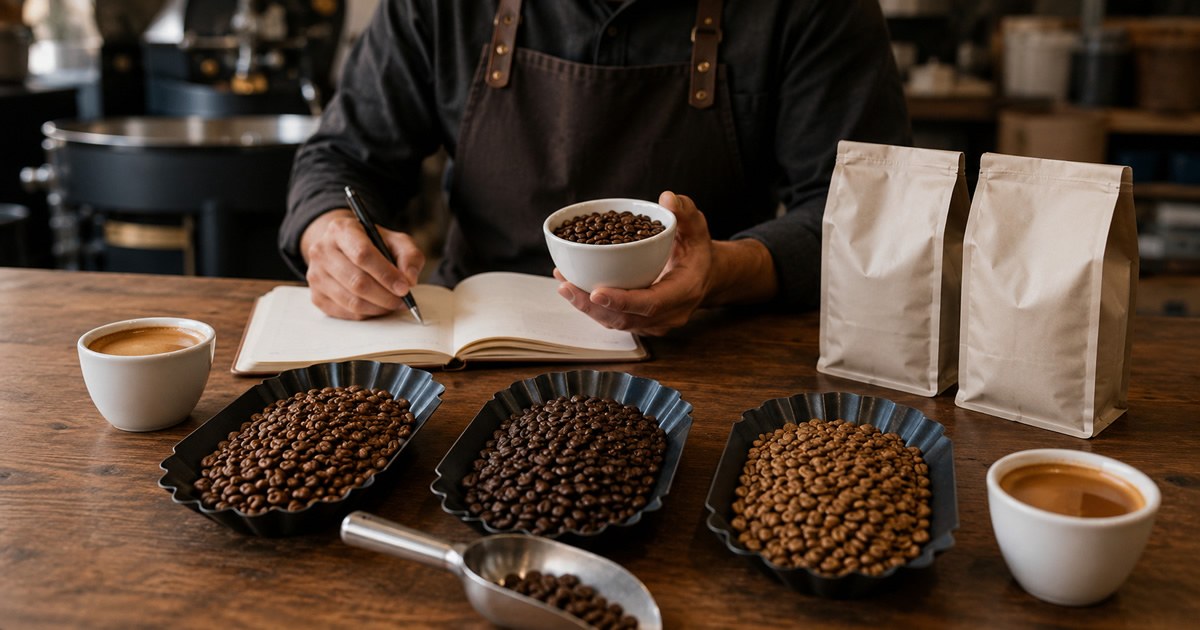
Most common mistakes
- Making decisions based only on kilogram price
- Treating the first tasting as the final decision
- Ignoring supply continuity and shipment planning
- Failing to test whether the product fits the business operation
- Not evaluating milk drinks, peak service and equipment compatibility separately
- Seeing the supplier only as a seller rather than an operational partner
Focusing only on kilogram price
One of the most common mistakes in wholesale coffee purchasing is making decisions based only on kilogram price. A lower price may appear attractive in the short term, but if product consistency is weak, cup behaviour changes frequently or the product requires constant intervention during service, the total operational cost increases.
The real cost of coffee is not limited to purchase price. Recipe inconsistency, waste, customer complaints, staff intervention, slower service and product instability are all part of the total cost structure.
A coffee that appears cheaper may not actually be cheaper for the business if it creates more waste, requires constant recalibration and lowers customer satisfaction during busy service.
What should be evaluated beyond price?
- Kilogram price
- Cost per cup
- Recipe consistency
- Waste ratio
- Impact on service speed
- Supply continuity
Treating the first tasting as the final decision
The first tasting is an important starting point, but it is not enough on its own for commercial coffee purchasing. Tasting environments are controlled. Real operations involve peak hours, changing staff, grinder adjustments and service pressure.
The true performance of a coffee becomes visible during daily use. Businesses should observe how the same product behaves over several days, how it performs during peak service and how manageable it remains across different staff members.
Coffee should be evaluated not only in the tasting cup, but also under real service conditions. Espresso flow, milk drink performance, body, crema, grind tolerance and repeatability should all be tested together.
Failing to verify product consistency
Product consistency is one of the most critical topics in wholesale coffee purchasing. If the blend structure changes frequently, roast profiles are not maintained batch by batch or cup character shifts with every order, building operational consistency inside the business becomes difficult.
This creates serious problems especially in businesses with regular service. Baristas are forced to recalibrate with every batch, recipes change constantly, product behaviour becomes unpredictable and cup quality starts to fluctuate.
Questions that should be asked about consistency
- Is the blend recipe stable?
- Is the roast profile maintained consistently?
- Does cup character change between batches?
- Are product changes communicated in advance?
- Can the same recipe produce repeatable results?
Ignoring supply continuity
Selecting a good product alone is not enough. The product must also be supplied regularly, predictably and through a structured shipment system. Delayed deliveries, sudden stock issues or last-minute product changes disrupt operational consistency.
Especially in high-volume businesses, supply continuity becomes just as important as product quality itself. When coffee is managed as a last-minute purchase only after stock runs out, operational standards weaken quickly.
For this reason, for businesses with regular consumption, wholesale coffee should be evaluated not only as a price advantage, but also as part of production and shipment planning.
Selecting products that do not fit the operation
Not every coffee is suitable for every business. A product may perform well during tasting but fail to match the business’s equipment, service intensity, milk drink ratio or staff structure.
For cafés with high milk-based drink sales, body and milk compatibility become critical. In filter-focused businesses, different priorities emerge. Hotels, restaurants, offices and chain operations may require stronger service consistency and supply discipline.
Operational data that should guide product selection
- Daily consumption volume
- Ratio of espresso and milk drinks
- Machine and grinder level
- Staff experience
- Service intensity
- Target cup character
Product selection for café operations should be evaluated separately. The coffee for cafés page provides a clearer framework according to different business structures.
Ignoring operational tolerance
In commercial operations, coffee is not always prepared under ideal conditions. Grinder settings may shift during the day, equipment cleaning may be delayed, recipe control may weaken during peak hours and different staff members may prepare the same product differently.
For this reason, operational tolerance matters. Highly sensitive coffees may work well in controlled environments, but become difficult to manage in busy businesses. Products with wider tolerance help protect service consistency.
In horeca operations, product selection should therefore be evaluated not only through aroma profile, but also through operational durability. This structure is examined more broadly within horeca coffee solutions.
Seeing the supplier only as a product seller
In wholesale coffee purchasing, suppliers should not be viewed only as companies shipping products. The right supplier should also contribute to product planning, supply structure, service rhythm and long-term consistency.
As businesses grow or service volume increases, this becomes even more important. A product that works at the beginning may become insufficient once the number of branches or operational complexity increases. For this reason, the supply structure should be evaluated from a long-term perspective.
What businesses should expect from a supplier
- Clear product consistency
- Planned production and shipment
- Products suitable for the business operation
- Regular communication
- Transparency regarding product changes
- Long-term supply discipline
How should the right purchasing decision be made?
The correct wholesale coffee purchasing decision should never depend on a single criterion. Product quality, price, supply continuity, equipment compatibility, service intensity and customer expectations must all be evaluated together.
Before selecting a product, businesses should first define their real operational needs. Which product group will be used? What is the daily consumption volume? How intense is the service flow? What is the ratio of milk drinks? How many staff members will prepare the product? Without answering these questions, product selection often remains incomplete.
The right coffee is not simply the one that tastes good during tasting. It is the one that can deliver the same result consistently within the business’s daily operation.
Many wholesale coffee purchasing problems emerge when products are evaluated separately from operations and supply systems. In commercial coffee use, product, supply and operation must work together.
To evaluate the right coffee supply structure and build a regular supply model for your business, contact us.


