
How to choose a coffee supplier?
A structured view of coffee supply based on continuity, standards and operational fit.
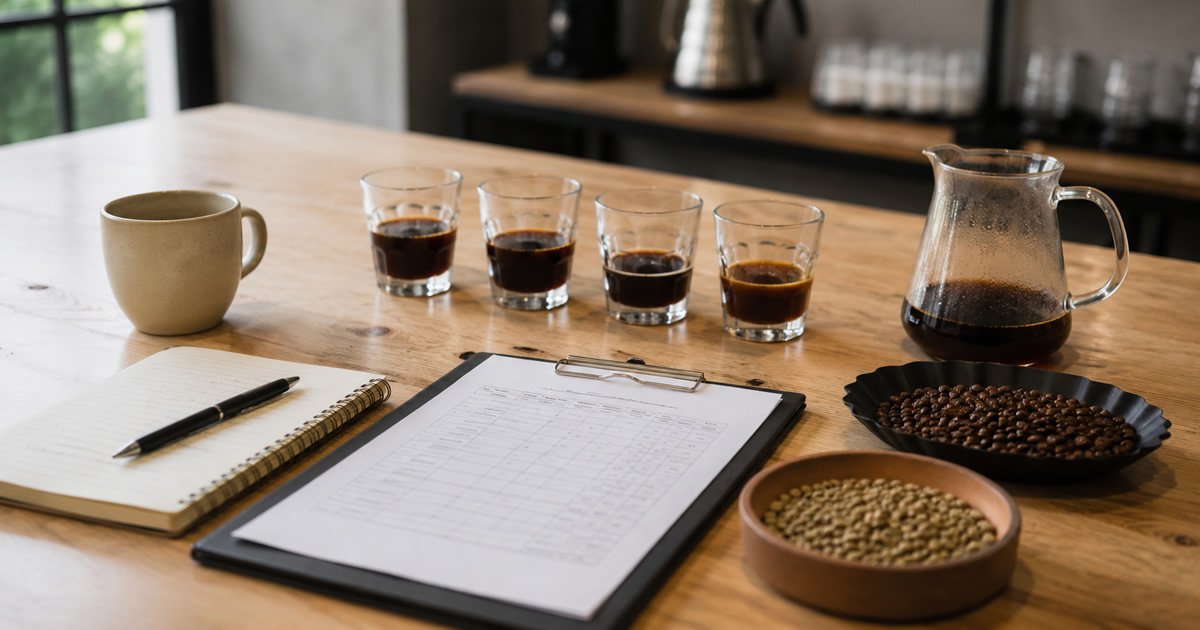
Key evaluation criteria
- Can the product standard be maintained across every batch?
- Does the supply process operate regularly and predictably?
- Does the product fit the business equipment, menu and service volume?
- Can cup quality be maintained during peak hours?
- Is price evaluated beyond kilogram cost, together with its operational impact?
First tasting is not enough on its own
Many businesses evaluate a coffee supplier based on the first tasting. Tasting is important, but in commercial use the decisive factor is how the same product behaves in daily service.
In a busy business, coffee is prepared at different times, by different staff members and under different service pressures. In this environment, the product must not only taste good; it must also deliver repeatable results with the same recipe.
A coffee that looks strong in the first tasting can become difficult to manage during peak service. Real performance is understood through daily use and repeated orders.
Product standard is the main indicator of a supplier
A strong coffee supplier must be able to maintain the same cup character across every batch. If the blend structure changes frequently, the roast profile is not stable or the product behaviour differs from batch to batch, building a standard inside the business becomes difficult.
This becomes especially visible in espresso service. Grind setting, extraction time, crema structure, body and milk drink performance are directly affected by small changes. For this reason, the supplier’s production discipline and repeatability must be evaluated carefully.
Questions to understand product standard
- Is the blend recipe stable?
- Is the roast profile maintained batch by batch?
- Can a similar cup result be achieved with the same recipe?
- Does the product maintain the same character under heavy use?
- Are possible product changes communicated to the business in advance?
Supply continuity is as important as product quality
Coffee supply is not simply sending product when an order arrives. The business’s consumption rhythm, order frequency and service volume must be planned in advance. Unplanned supply structures directly affect service quality, especially in high-volume businesses.
Delayed shipments, changing product structures or last-minute product changes disrupt the business’s recipe, stock plan and customer experience. For this reason, a supplier should be evaluated not only by product quality, but also by shipment discipline.
Managing coffee supply as an order placed only when stock runs low creates long-term problems. The right structure is a production and shipment system planned around consumption rhythm.
The product must fit the business operation
Not every coffee is suitable for every business. Menu structure, equipment, service volume, milk drink ratio and staff experience directly affect product selection.
A café with high milk-based drink sales does not have the same need as a business focused on filter coffee. Hotels, restaurants, offices and chain operations also require different product behaviours and supply disciplines.
What to consider when choosing a product
- Daily cup volume
- Espresso and milk drink ratio
- Machine and grinder level
- Staff experience and recipe discipline
- Target cup character
- Service intensity and speed requirement
Product selection for café operations should be evaluated in more detail. The coffee for cafés page can serve as a core reference for different service structures.
Operational tolerance should not be ignored
In commercial businesses, coffee is not always prepared under ideal conditions. Grinder settings may change during the day, equipment cleaning may be delayed, staff experience may vary and recipe control may weaken during peak hours.
For this reason, how the product reacts to small changes matters. Highly sensitive coffees can perform well with controlled teams, but may become difficult to manage in busy operations. Products with wider tolerance provide a more stable service structure.
In horeca operations, coffee selection should not be based only on sensory profile; service speed, recipe stability, equipment tolerance and supply continuity must be considered together. This structure is also evaluated within horeca coffee solutions.
It is not enough for a coffee to be good. It must be manageable within the business’s existing equipment, staff structure and service tempo.
Price should not be the only decision criterion
Price is of course important when choosing a coffee supplier. However, when price is evaluated only by kilogram, the result is incomplete. If a lower-priced product creates recipe deviation, waste, customer complaints or operational difficulty, total cost may increase.
A healthy evaluation should consider price together with product standard, supply continuity and operational impact.
What to consider when evaluating price
- Kilogram price
- Cost per cup
- Waste and recipe loss
- Product standard
- Supply continuity
- Operational workload
How should the long-term supply structure be evaluated?
Choosing a coffee supplier is not a short-term purchasing decision. As the business grows, the number of branches increases or daily service volume rises, the importance of the supply structure becomes more visible.
The right supplier should meet today’s needs while maintaining the same standard during growth. If the product structure, production discipline and shipment model are not suitable for long-term work, a choice that seems right at the beginning may create problems later.
Questions for long-term evaluation
- What is the business’s monthly consumption volume?
- Which equipment will the product be used with?
- Is service mainly espresso, milk drinks or filter coffee?
- How will product changes be managed?
- How will shipment frequency be planned?
- Can the same product deliver similar results across different branches?
If these questions cannot be answered clearly, the supply relationship may appear to work in the short term but is likely to create problems in the long term.
How can the right supplier be identified?
The right coffee supplier is not only a product provider. If product standard, planned shipment, usage scenario and operational fit can be managed together, the supply structure is being built correctly.
For this reason, when choosing a coffee supplier, businesses should consider not only today’s price or first tasting result, but also long-term operational security. For more information about a structured supply model for businesses, review the wholesale coffee page.
To evaluate the right coffee supply structure for your business, contact us.


